
inari
@inari@piefed.zip
 piefed
1.7.0-dev
piefed
1.7.0-dev
0
Followers
0
Following
Joined February 07, 2026
Posts

inari
@inari@piefed.zip
piefed.zip
As long as the maintainers can handle it, sounds like a good development for the kernel
View full thread on piefed.zip
5
0
0
inari
@inari@piefed.zip
piefed.zip
This should not be on the user to figure out
View full thread on piefed.zip
27
1
0
inari
@inari@piefed.zip
piefed.zip
@inari@piefed.zip
in
technology
·
18h ago
China exports a ton of cleantech — and the world is poised to want more
53
2
0
inari
@inari@piefed.zip
piefed.zip
@inari@piefed.zip
in
programmer_humor
·
1d ago
What was the issue? Without looking at the PR it’s hard to judge
View full thread on piefed.zip
12
4
0
inari
@inari@piefed.zip
piefed.zip
Not Just Bikes would love to hear about this
View full thread on piefed.zip
0
0
0
inari
@inari@piefed.zip
piefed.zip
A newly recognized pollutant is widely present in the atmosphere
A newly recognized pollutant is widely present in the atmosphere
A new study shows that a specific type of silicone, the so-called methylsiloxanes, is widely present in the atmosphere across diverse environments. Also, concentrations appear to be much higher than expected. According to the researchers, this raises concerns about their potential—yet poorly understood—effects on human health and the climate. Methylsiloxanes are commonly used in industry, transportation, cosmetics, and household products. The study was supervised by Utrecht University and the University of Groningen, and the results are published in Atmospheric Chemistry and Physics.
View on piefed.zip
54
7
1
inari
@inari@piefed.zip
piefed.zip
That was poorly worded of me. I meant to highlight this point:
Around 70% of the new capacity will serve the ESS market, with the remaining 30% going to EVs.
View full thread on piefed.zip
18
2
0
inari
@inari@piefed.zip
piefed.zip
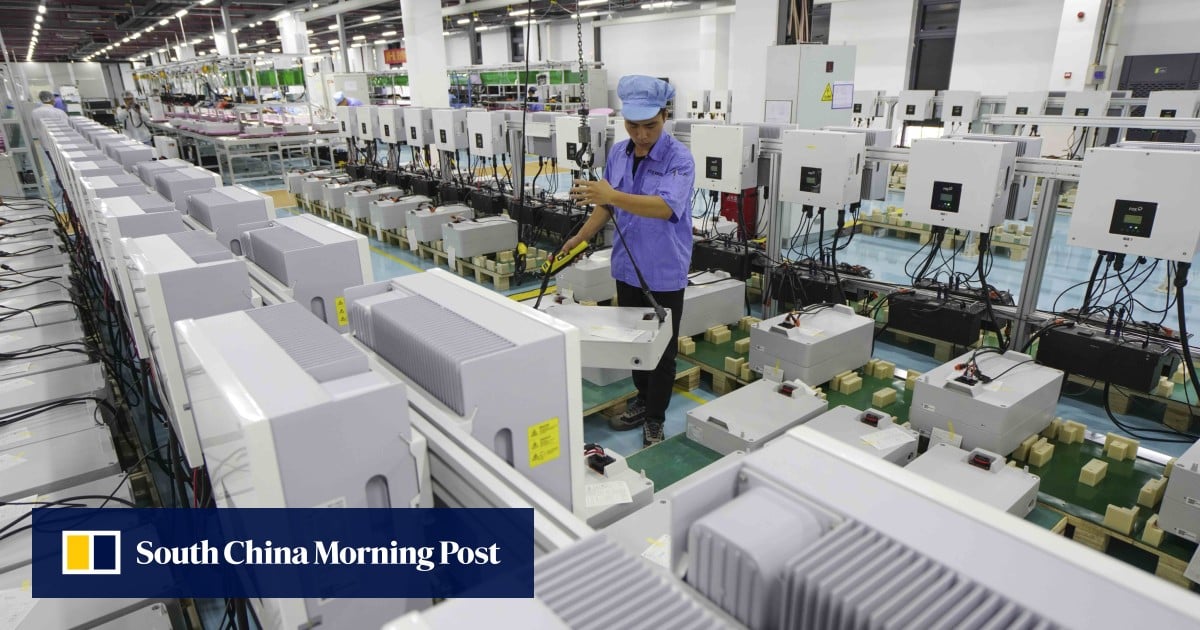
China amps up battery buildout to ‘10 times US 2025 capacity’, mainly for energy storage
Summary: Chinese battery companies are expanding production capacity to 900 GWh per year, mainly for Battery Energy Storage.
Chinese battery makers announced plans in early 2026 to add over 600 GWh of new production capacity for the energy storage system (ESS) market, with the total buildout reaching 900 GWh annually once complete — roughly ten times the 58 GWh installed across the entire US in 2025.
Around 70% of the new capacity will serve the ESS market, with the remaining 30% going to EVs. The 19 Chinese producers tracked by GGII are investing a combined 180 billion yuan ($26.3 billion) in new lithium-ion factories.
The expansion is being driven by surging demand linked to AI data centre growth and global decarbonisation, with global ESS battery demand already up 79% year-on-year to 550 GWh in 2025, where Chinese firms hold over 80% market share.
CATL alone is investing 20 billion yuan in a single zero-carbon production hub in Fujian capable of delivering up to 200 GWh annually. However, Chinese regulators have begun intervening, convening major battery makers to address concerns about irrational price competition and overcapacity.
View on piefed.zip
0
1
1
inari
@inari@piefed.zip
piefed.zip
We know since Snowden that they intercept everything anyway
View full thread on piefed.zip
2
0
0
inari
@inari@piefed.zip
piefed.zip
@inari@piefed.zip
in
programmer_humor
·
2d ago
Funny how we don’t frame it as “America may be spying on you” when American companies do the exact same shit
View full thread on piefed.zip
70
6
0
inari
@inari@piefed.zip
piefed.zip
@inari@piefed.zip
in
programmer_humor
·
3d ago
Same tbh
View full thread on piefed.zip
25
0
0
inari
@inari@piefed.zip
piefed.zip
The New Twin Fossil Shock | Ember
The 2020s have already seen two major fossil fuel shocks. In 2022, Russia, the world’s largest fossil fuel exporter, invaded Ukraine. In 2026, the Strait of Hormuz, the world’s largest oil and LNG supply route, was shut by the US-Israel war with Iran. The parallels with the 1970s oil shocks are striking. But so too is the difference. For the first time, there are scalable, cost-competitive alternatives. Solar, wind, batteries, EVs and other electrotech offer a permanent route out of fossil dependence. The shock has jolted the electric age forward. But the response is a choice: lean into local, electric security, or reach back to the old fossil playbook.
View on piefed.zip


1
3
1
inari
@inari@piefed.zip
piefed.zip
Yeah, it’s almost all negative, this is really the only positive (that and the erosion of Trump domestic support)
View full thread on piefed.zip
4
1
0
inari
@inari@piefed.zip
piefed.zip
Japan's greenhouse gas emissions fell to record low in FY2024
Summary: Japan’s greenhouse gas emissions fell to record low in FY2024
Japan’s greenhouse gas emissions dropped 1.9% in fiscal year 2024 (ending March 2025), reaching 1.046 billion metric tons of CO₂ equivalent — the lowest level since records began in 1990/91 and the third consecutive annual decline.
By sector, industrial CO₂ emissions fell 2.5% and transport dropped 1.6%, while the commercial sector edged up 0.2% and households saw a 0.7% decline. Japan is targeting a 46% reduction from 2013 levels by 2030; the FY2024 figure represents a 24.9% reduction so far.
The decline reflects growing contributions from clean energy: renewables accounted for 23.1% of electricity generation and nuclear 9.4%, while thermal power’s share fell to 67.5%.
Emissions had surged following the 2011 Fukushima disaster, peaking at 1.394 billion tons in fiscal 2013, before trending downward as nuclear reactors were gradually restarted and renewable energy expanded.
View on piefed.zip
20
0
1
inari
@inari@piefed.zip
piefed.zip
My IT department doesn't even let us put stickers on the laptops out of concerns about damage
View full thread on piefed.zip
30
17
0
inari
@inari@piefed.zip
piefed.zip
Britain breaks solar energy record twice as UK’s biggest solar farm gets approval

0
0
1
inari
@inari@piefed.zip
piefed.zip
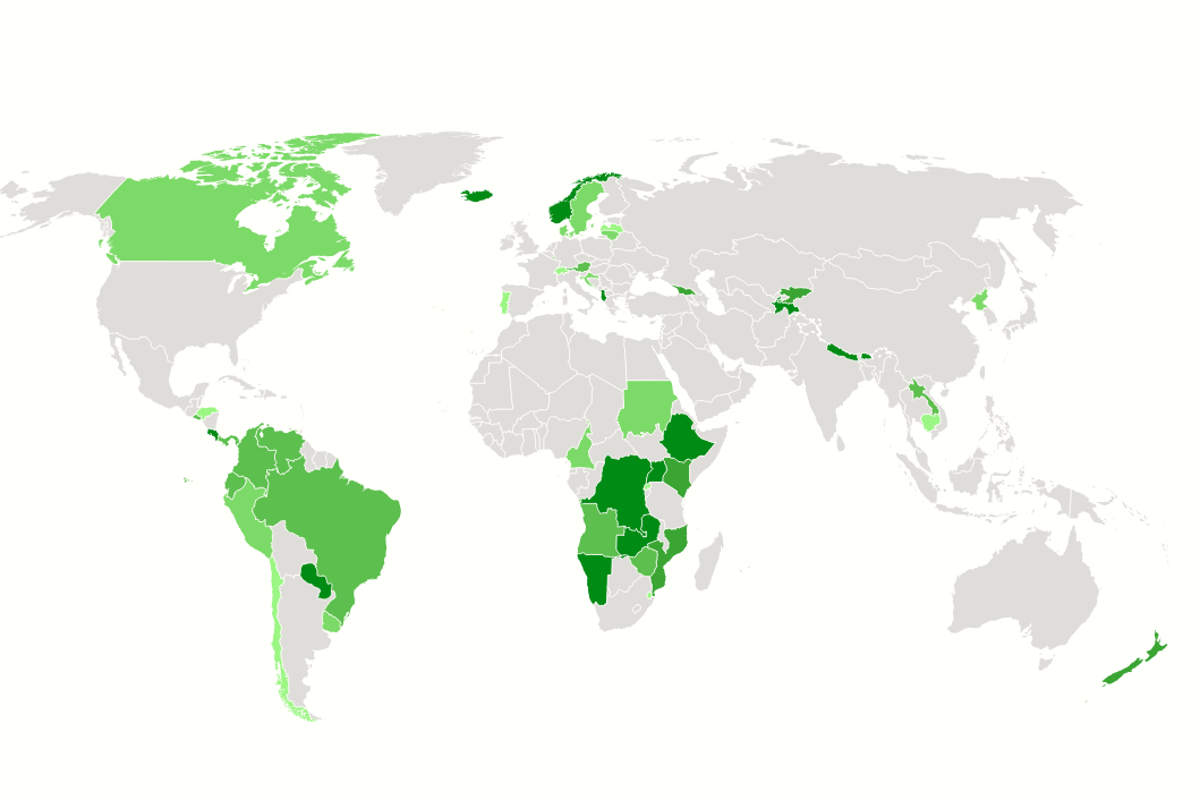
Seven countries now generate nearly all of their electricity from renewable energy sources, according to newly compiled figures.
Albania, Bhutan, Nepal, Paraguay, Iceland, Ethiopia and the Democratic Republic of Congo produced more than 99.7 per cent of the electricity they consumed using geothermal, hydro, solar or wind power.
View full thread on piefed.zip
0
0
0
inari
@inari@piefed.zip
piefed.zip
Seven countries now generate 100% of their electricity from renewable energy

0
13
0
inari
@inari@piefed.zip
piefed.zip
Turns out religious people love loopholes
View full thread on piefed.zip
0
0
0
inari
@inari@piefed.zip
piefed.zip
Oil Price Shock Drives 140% Surge in China's EV Exports to Record High

0
0
1
inari
@inari@piefed.zip
piefed.zip
Because it’s not what they tested in the study. If the Hindu vegetarian diet includes dairy, I doubt it’d be as efficient as a vegan diet
View full thread on piefed.zip
0
5
0
inari
@inari@piefed.zip
piefed.zip
A new study found a vegan Mediterranean diet significantly reduced environmental impacts related to human health (−54.5%), ecosystems (−50.9%), and resource use (−43.4%) compared to a traditional Mediterranean diet
View on piefed.zip
0
14
0
inari
@inari@piefed.zip
piefed.zip
@inari@piefed.zip
in
technology
·
Apr 11, 2026
First AI Model From Zuckerberg's Wildly Expensive Superintelligence Lab Flops Compared to Virtually All Rivals
510
104
0
inari
@inari@piefed.zip
piefed.zip
@inari@piefed.zip
in
technology
·
Apr 11, 2026
I’m ok with buying their used stuff as long as I can install Linux on them
View full thread on piefed.zip
0
0
0
inari
@inari@piefed.zip
piefed.zip
Bro drew him like Boss Nass
View full thread on piefed.zip
12
2
0
inari
@inari@piefed.zip
piefed.zip
Electric car registrations ahead of petrol models in Germany
Summary: Sales of pure Electric cars have overtaken sales of purely petrol cars in Germany in March, following incentives and oil crisis
Pure electric car registrations in Germany rose 66% year-on-year in March to nearly 71,000 units, pushing their market share to 24% and edging ahead of petrol cars, which fell 5% to 67,000 (a 23% share). The milestone reflects two concurrent drivers: a new government subsidy programme targeting lower-income buyers launched at the start of 2026, and a sharp oil price spike driven by the Iran war that has significantly boosted consumer interest in EVs — though that demand will take months to fully show up in registration data given delivery wait times.
Hybrids dominated overall with a 40% share (~118,000 units, up 16%), while diesel continued its decline to ~38,000 units (13% share). Private car purchases grew particularly strongly, trimming the company car share to 65%. Tesla staged a notable recovery — sales more than quadrupled to over 9,000 after price cuts, following the reputational hit from Elon Musk’s political activities. EV sales remain well below the government’s target of 15 million EVs on the road by 2030.
View on piefed.zip

0
0
0
inari
@inari@piefed.zip
piefed.zip
Korea plans to mandate solar panels on rooftops of new factories in renewable energy push

0
1
0
inari
@inari@piefed.zip
piefed.zip
Also interesting to see how imports help with those peaks. I imagine it must be things like hydropower from Oregon. Really shows how integrating these systems is important.
View full thread on piefed.zip
4
1
0
inari
@inari@piefed.zip
piefed.zip
Philippines accelerates grid entry for 1.28 GW of solar
View on piefed.zip


0
1
0
inari
@inari@piefed.zip
piefed.zip
Beef production drives 40% of agriculture-linked forest destruction, Brazil leads
0
7
0






inari
@inari@piefed.zip
piefed.zip
Google has criticized the European Union’s intentions to achieve digital sovereignty through open-source software. The company warned that Brussels’ policies aimed at reducing dependence on American tech companies could harm competitiveness. According to Google, the idea of replacing current tools with open-source programs would not contribute to economic growth.
Kent Walker, Google’s president of global affairs and chief legal officer, warned of a competitive paradox that Europe is facing. According to the Financial Times, he said that creating regulatory barriers would be harmful in a context of rapid technological advancement. His remarks came just days after the European Commission concluded a public consultation assessing the transition to open-source software.
Google’s chief legal officer clarified that he is not opposed to digital sovereignty, but recommended making use of the “best technologies in the world.” Walker suggested that American companies could collaborate with European firms to implement measures ensuring data protection. Local management or servers located in Europe to store information are among the options.
The EU is preparing a technological sovereignty package aimed at eliminating dependence on third-party software, such as Google’s. After reviewing proposals, it concluded that reliance on external suppliers for critical infrastructure entails economic risks and creates vulnerabilities. The strategy focuses not only on regulation but also on adopting open-source software to achieve digital sovereignty.
According to Google, this change would represent a problem for users. Walker argues that the market moves faster than legislation and warns that regulatory friction will only leave European consumers and businesses behind in what he calls “the most competitive technological transition we have ever seen.” As it did with the DMA and other laws, Google is playing on fear. Kent Walker suggested that this initiative would stifle innovation and deny people access to the “best digital tools.”
The promotion of open-source software aims to break dependence on foreign suppliers, especially during a period of instability caused by the Trump administration. The European Union has highlighted the risks of continuing under this system and proposes that public institutions should have full control over their own technology.
According to a study on the impact of open-source software, the European Commission found that it contributes between €65 billion and €95 billion annually to the European Union’s GDP. The executive body estimates that a 10% increase in contributions to open-source software would generate an additional €100 billion in growth for the bloc’s economy.
View on piefed.zip


0
2
1
